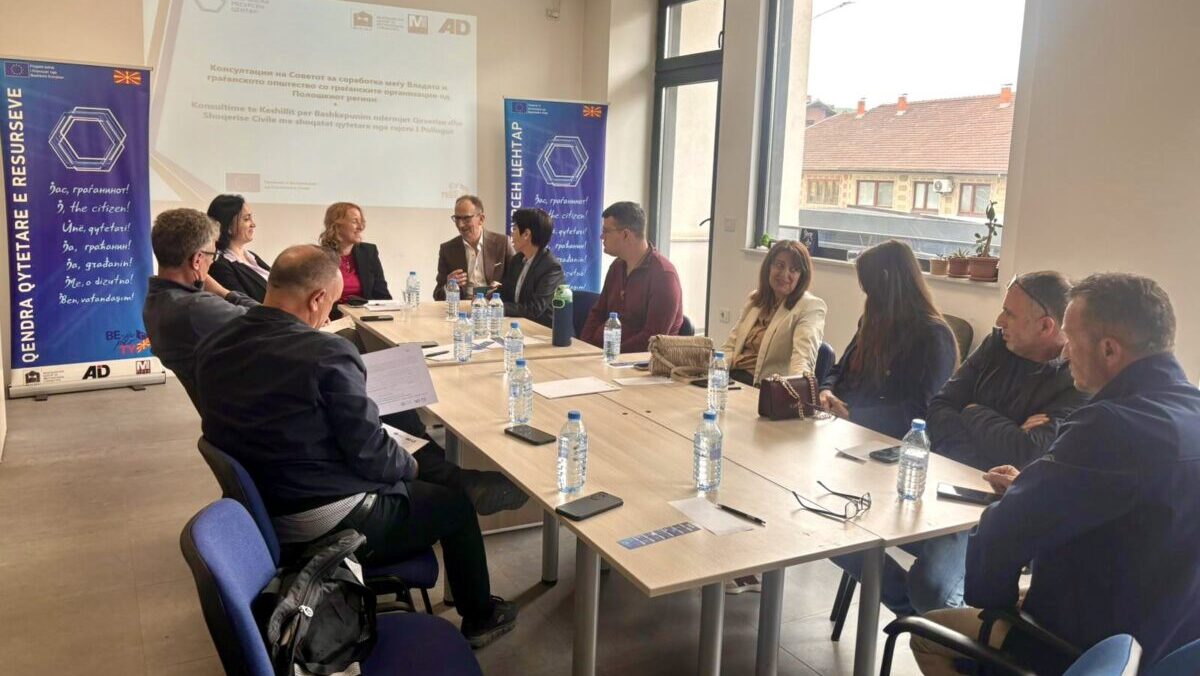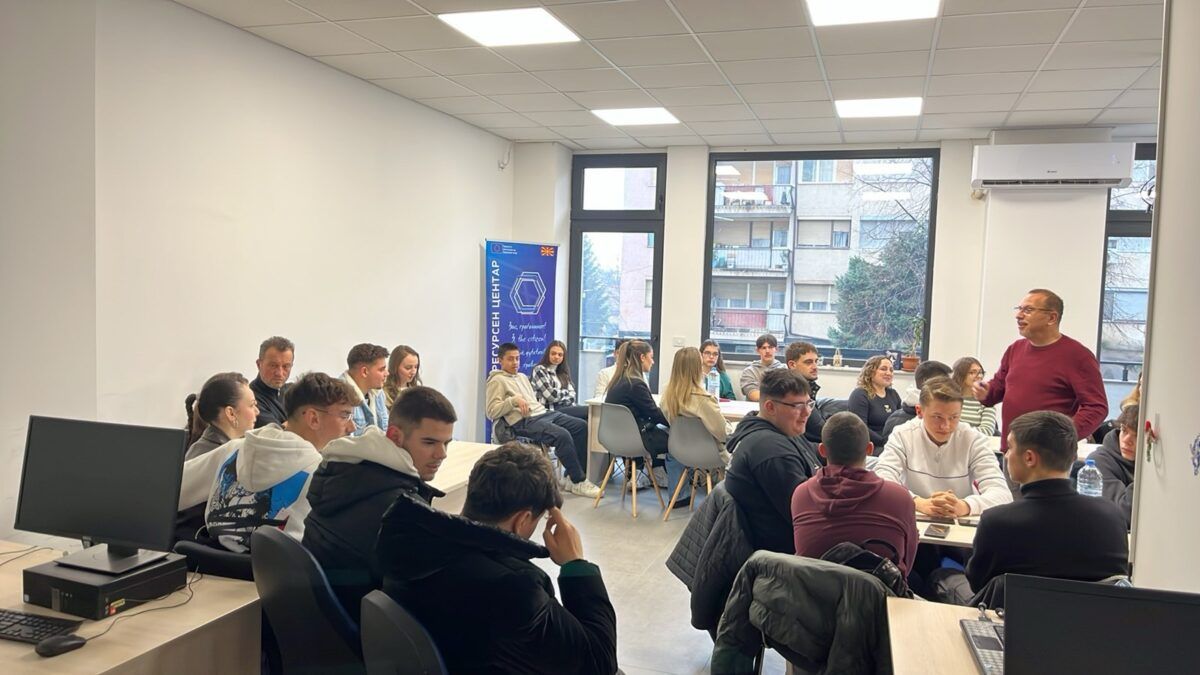
"The promotion of volunteering contributes to strengthening the awareness of young people on how to be more useful in their community. Among other things, volunteering teaches young people teamwork, allows them to develop their capacities and skills for solving challenges and transforms the young person into an active citizen" were some of the conclusions of the debate on volunteering, which was held on 4th December 2025 at the Resource Centre in Gostivar.
The aim of the event was to mark World Volunteer Day and to contribute to encouraging citizens, primarily young people, to get involved and initiate volunteer actions for positive changes in their communities.
In the first part of the event, the facilitator Zlatko Talevski presented the basic principles of volunteering, as well as the types of activities that fall within the broader conceptual framework of volunteering:
- Help or self-help in the community (humanitarian actions, assistance in natural disasters...),
- Philanthropy or serving others,
- Participation and civic engagement (activity in civil society organisations, civic initiatives, informal groups...) and
- Advocacy and participation in campaigns or events (participation in advocating for a cause or participation in a campaign of a political party or political movement, volunteering at sports events, etc.)
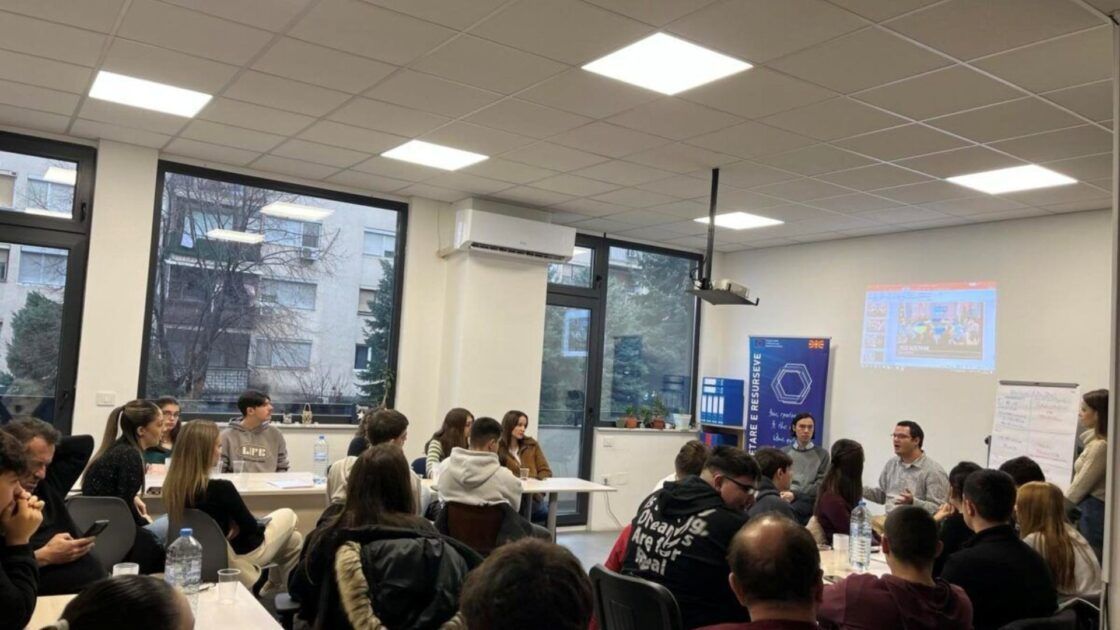
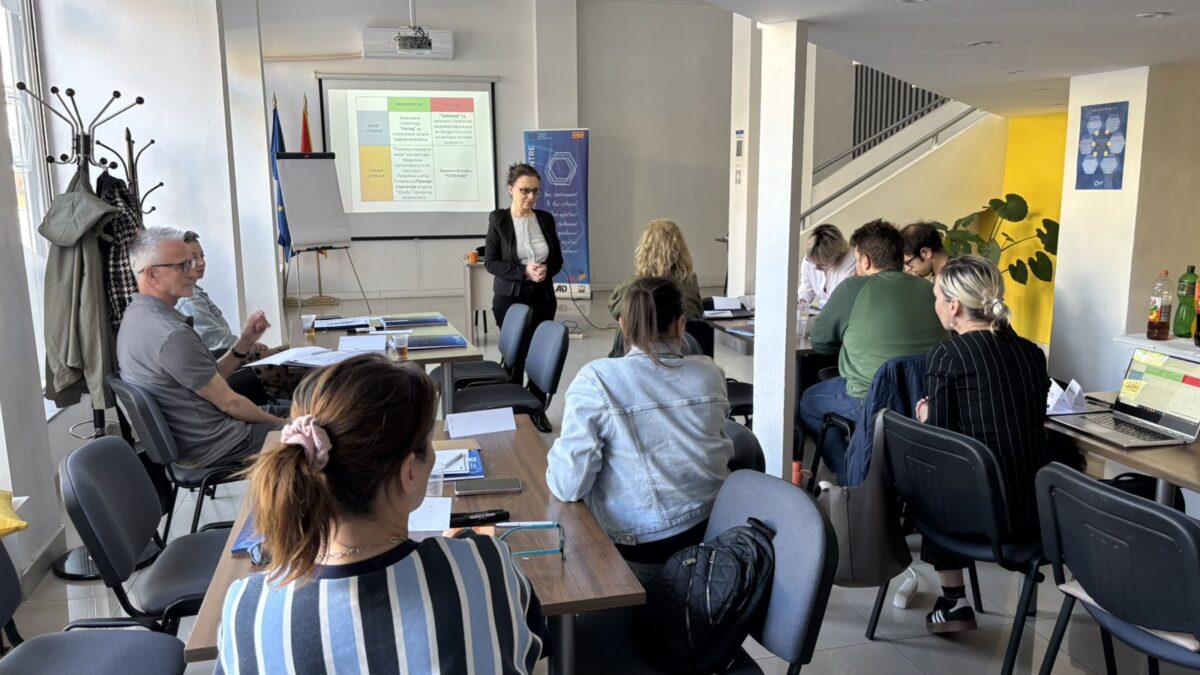
Then, through an interactive debate, the participants discussed statements related to volunteering and took positions depending on whether they agreed with the statements or not, arguing why they thought their position was correct. During the discussion, the participants had the opportunity to change their position, if the arguments from the opposite side convinced them of this.
“This workshop on the occasion of the International Volunteer Day is one of the better workshops I have participated in and left a strong impression on me,” said Erin Sulejmani, a volunteer at the Red Cross.
In the second part of the event, the participants worked in three groups according to the World Café model, where they analysed the similarities and differences between volunteering, internships and traineeships. This was followed by a rotation through the groups and at the end a presentation of the joint conclusions.
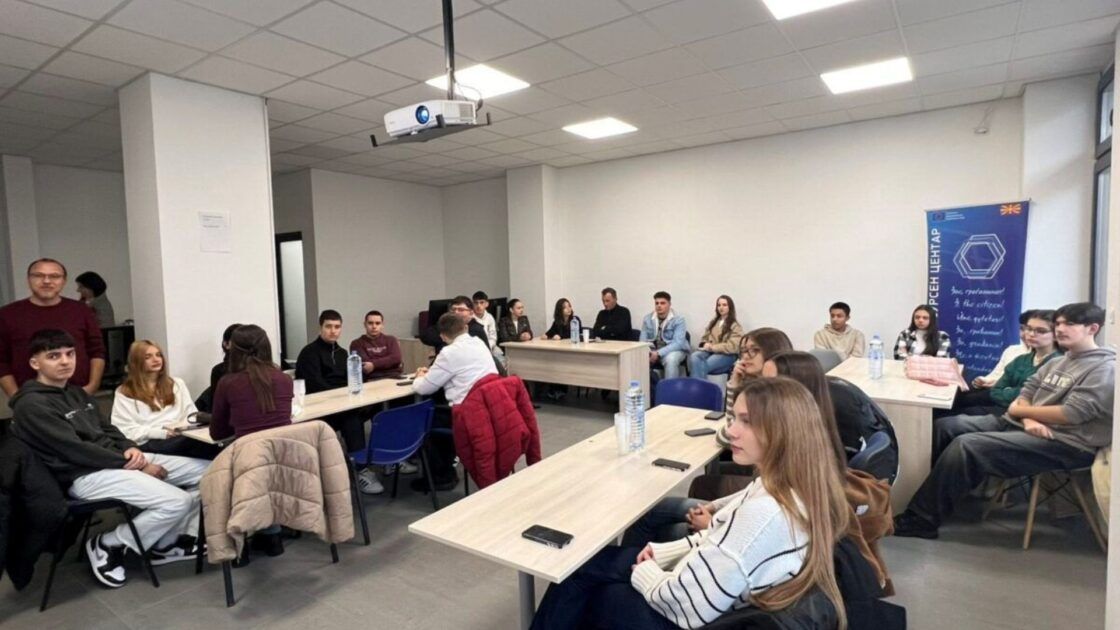
“The debate was everything I expected. I learned a lot of new and useful things that will help me be more useful in my community,” said Dea Abdulai, a high school student and participant in the debate.
After the debate, examples of activities and actions that are part of the broader framework of volunteering were presented, visually displayed through photographs and personal testimonies from volunteers, as inspiration for future involvement. “The whole event was inspiring and left a positive impression on me. I learned new ways to get involved in volunteer activities and make a difference in the community,” said Eli Gjurchinoska, a high school student.
The debate was also interesting and useful for Dario Mihajlovic, a high school student: “I had a great time and enjoyed the shared examples and discussions with the other participants. I learned how important volunteering is for the community and how each of us can contribute with small but significant deeds,” he added.
The event showed that volunteering is a way for young people to get active, learn through participation and contribute to the development of the community in which they live.
The event was organised under the project “EU Support for the Civil Society Resource Centre – Phase 2” funded by the European Union. It is implemented by the National Civil Society Development Foundation Civic Resource Centre, the Macedonian Centre for International Cooperation, the Association for Democratic Initiatives – ADI, Gostivar and Media Plus, Shtip.