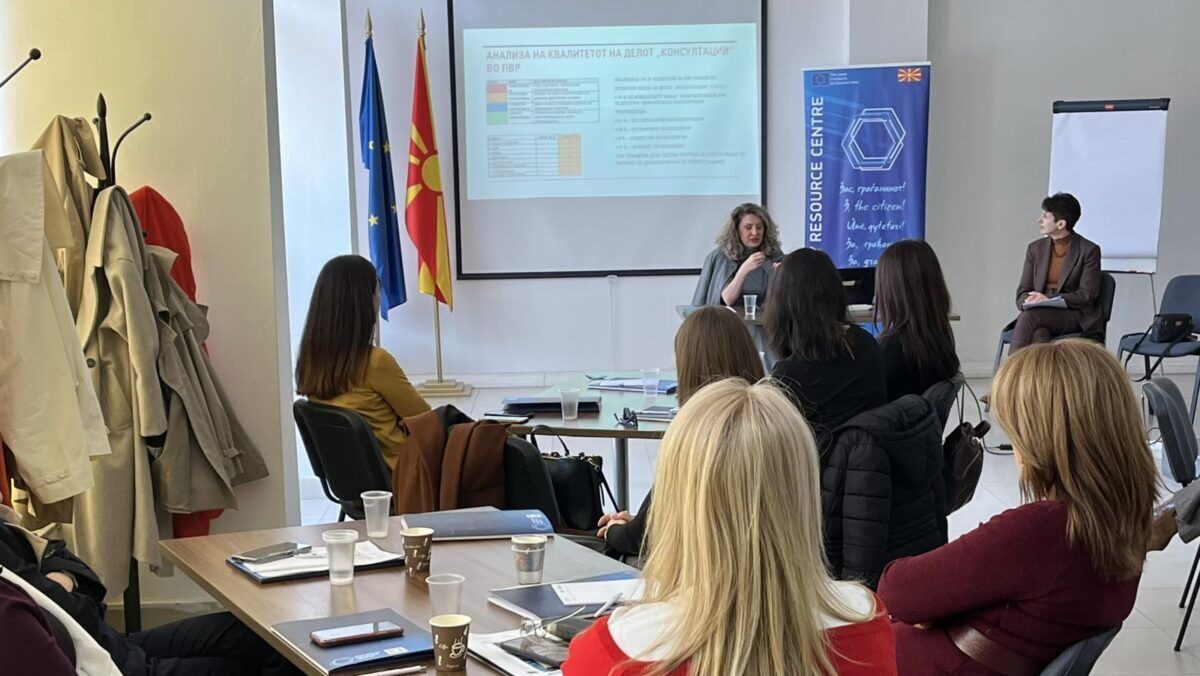
On 13 March 2026, a training session entitled “Effective Participation of Civil Society Organisations in the Policymaking Process” was held in the Civic Resource Centre, Skopje. The event was organised by the Civic Resource Centre, in partnership with the General Secretariat of the Government of the Republic of North Macedonia and the Ministry of Public Administration. The training was attended by 23 civil servants, members of the Network of Civil Servants for Cooperation with Civil Society and coordinators for Regulatory Impact Assessment (RIA).
The aim of the training was to improve understanding and the practical application of mechanisms for involving civil society organisations in the processes of drafting laws, strategies and other public policies, as well as to promote more effective use of the existing mechanisms for public consultation. In the first session, Zlatko Talevski, regional civil society expert at the Civic Resource Centre, presented the different forms and mechanisms for the participation of civil society organisations and citizens in the policymaking process at both local and national level, highlighting the importance of timely and meaningful involvement of stakeholders.
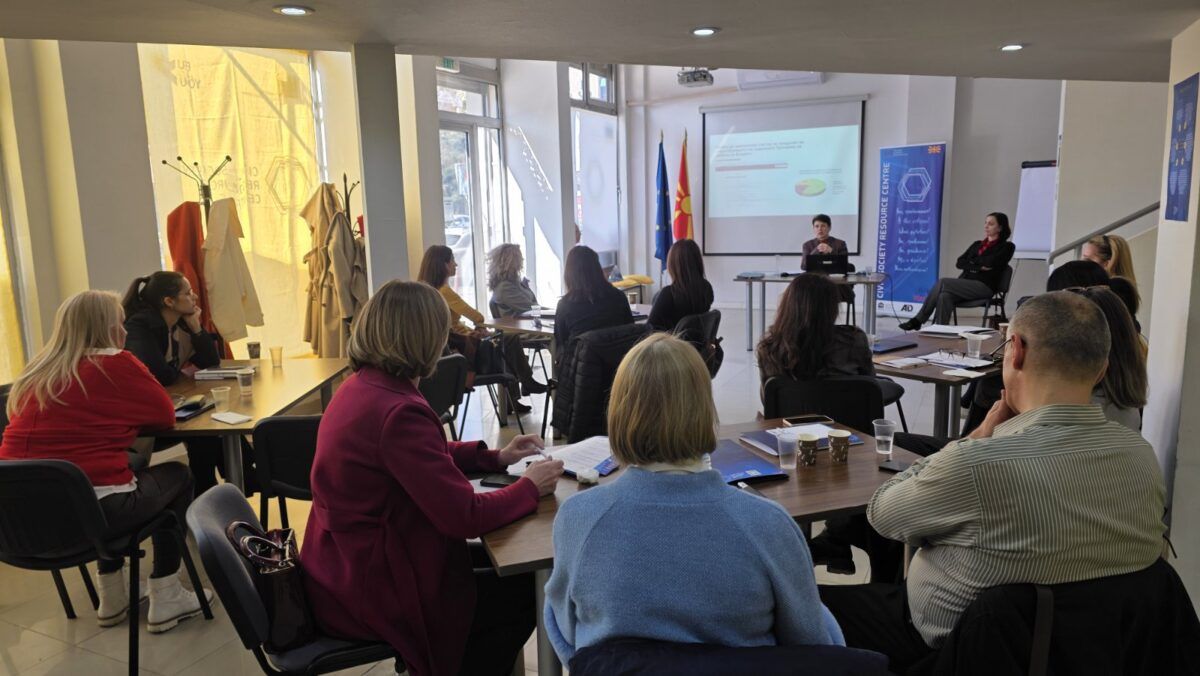
This was followed by a presentation from Gordana Gapić Dimitrovska, State Adviser at the Ministry of Public Administration, who outlined the role of ENER – the Single National Electronic Register of Regulations – as a mechanism for online public consultations and an important tool in the process of drafting legislation. She also pointed to the most common shortcomings in consultation reports, such as insufficient identification of stakeholders, the lack of a clear overview of the opinions received, and inadequate explanation of accepted or rejected proposals. The key recommendations highlighted included the consistent publication of draft laws on ENER, the early involvement of stakeholders, and improving the quality of Regulatory Impact Assessment (RIA) reports.
The findings of the Report on the Consultation Process in the Preparation of Draft Laws and Strategies in 2025 were presented by Suzana Nikodievikj-Filipovska, Head of the Policy Analysis and Coordination Sector at the General Secretariat of the Government. According to the report, out of 73 working groups established in 2025 for the preparation of laws and strategies, CSOs’ representatives were included in 42 working groups (57.5%), which represents a decrease compared to 2024. In addition, out of 133 draft laws adopted by the Government, 74 were subject to Regulatory Impact Assessment, and 27 (36.5%) were published on ENER. With regard to RIA reports, 40 draft laws (54.1%) were submitted to the Government with a RIA report. Although the “Consultations” section was completed in 87.5% of the reports, in most cases only the stakeholders or institutions from which opinions had been requested were listed, while only 30% of the reports contained an adequately and thoroughly completed consultations section. The data show that 199 comments were submitted by stakeholders on the draft laws published on ENER, of which 10.1% came from CSOs, indicating the need for additional efforts to encourage civil society participation in consultation processes. Out of a total of 34 responses to stakeholders’ comments, 27 were of a formal nature, meaning that the ministry merely thanked the stakeholder for the submitted comment and commitment to improving the draft law, and indicated that the remarks would be carefully considered. Only 7 comments (3.5%) received a substantive response. In 2025, 30% of ministries assessed the CSOs’ contribution to the policymaking process as substantial, while for 50% of the ministries the CSOs’ contribution was considered satisfactory, which is an improvement compared to 2024.
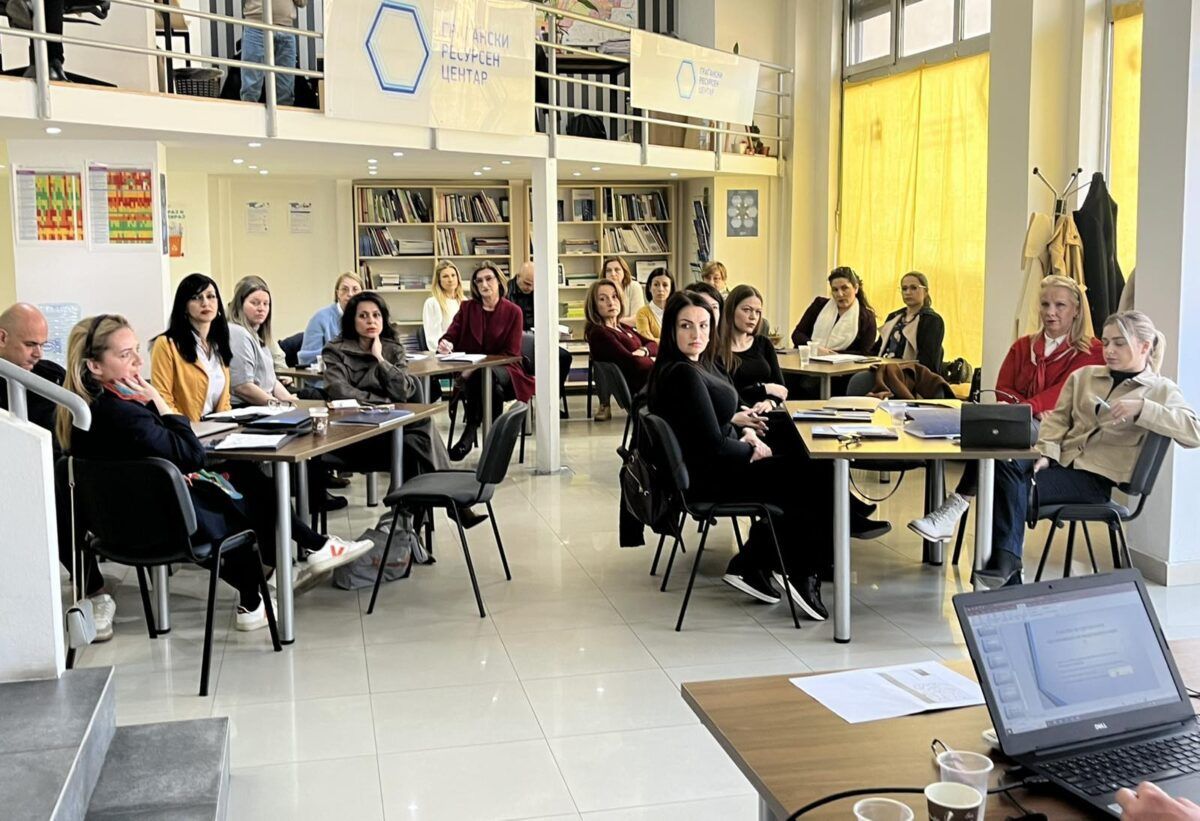
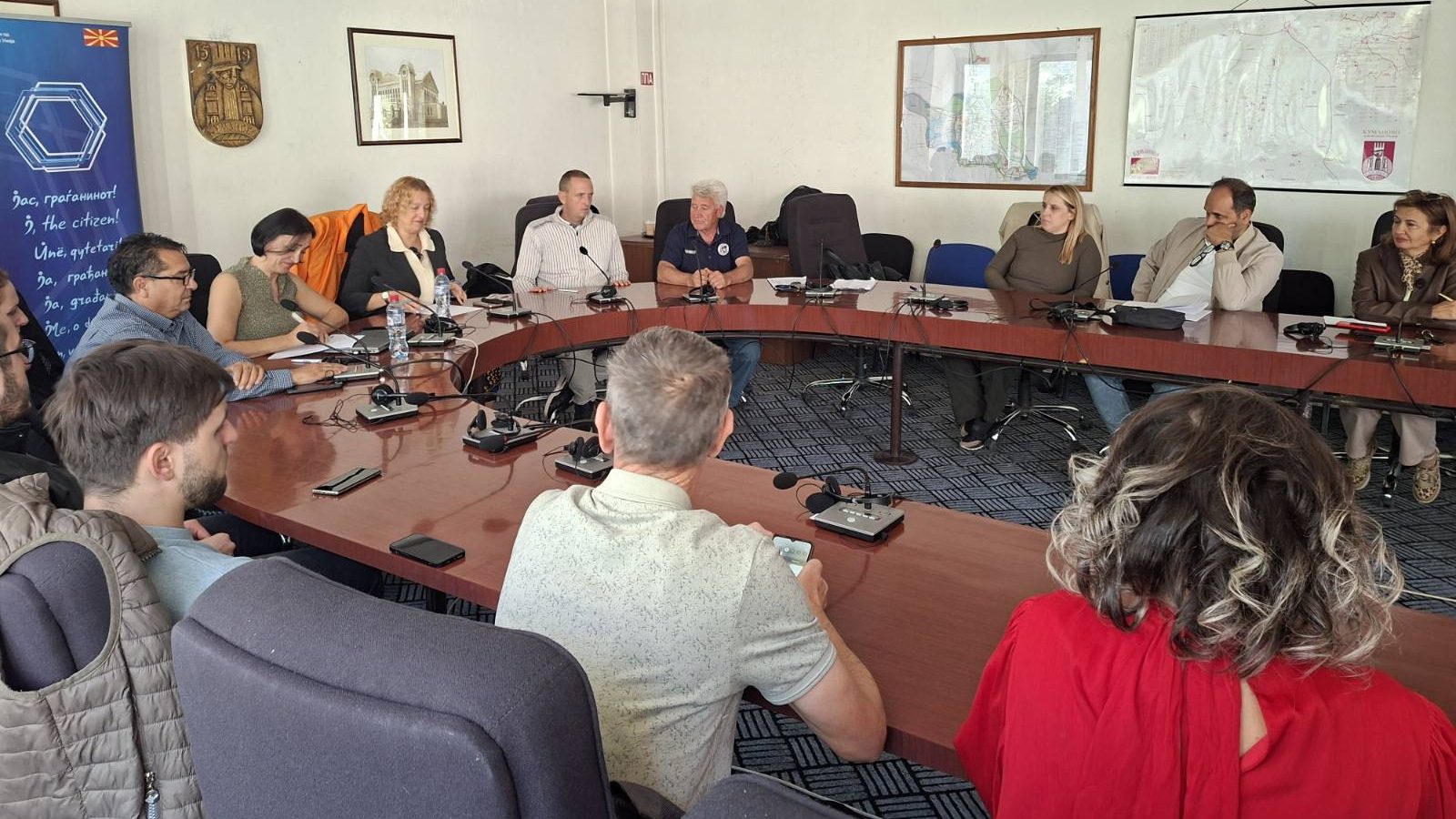
The training enabled an exchange of experiences and a constructive discussion on improving the consultation process and strengthening cooperation between institutions and civil society organisations, with the aim of creating higher-quality and more inclusive public policies.
The training was organised under the project “EU Support to the Civil Society Resource Centre – Phase 2”, funded by the European Union and implemented by the Civil Society Resource Centre Foundation, the Macedonian Centre for International Cooperation, the Association for Democratic Initiatives – Gostivar, and Media Plus – Shtip.