The two associations, the Helsinki Committee for Human Rights and the Center for Strategic Research and Analysis Bitola, conducted monitoring of hate speech and digital threats during the 2025 Local Elections. These activities were implemented within their sub-grants received under the project "EU Support to the Civil Society Resource Centre - Phase 2". Although the monitoring is based on different methodological approaches, the findings indicate the existence of hate speech, polarization and the emergence of manipulative practices in the digital space.
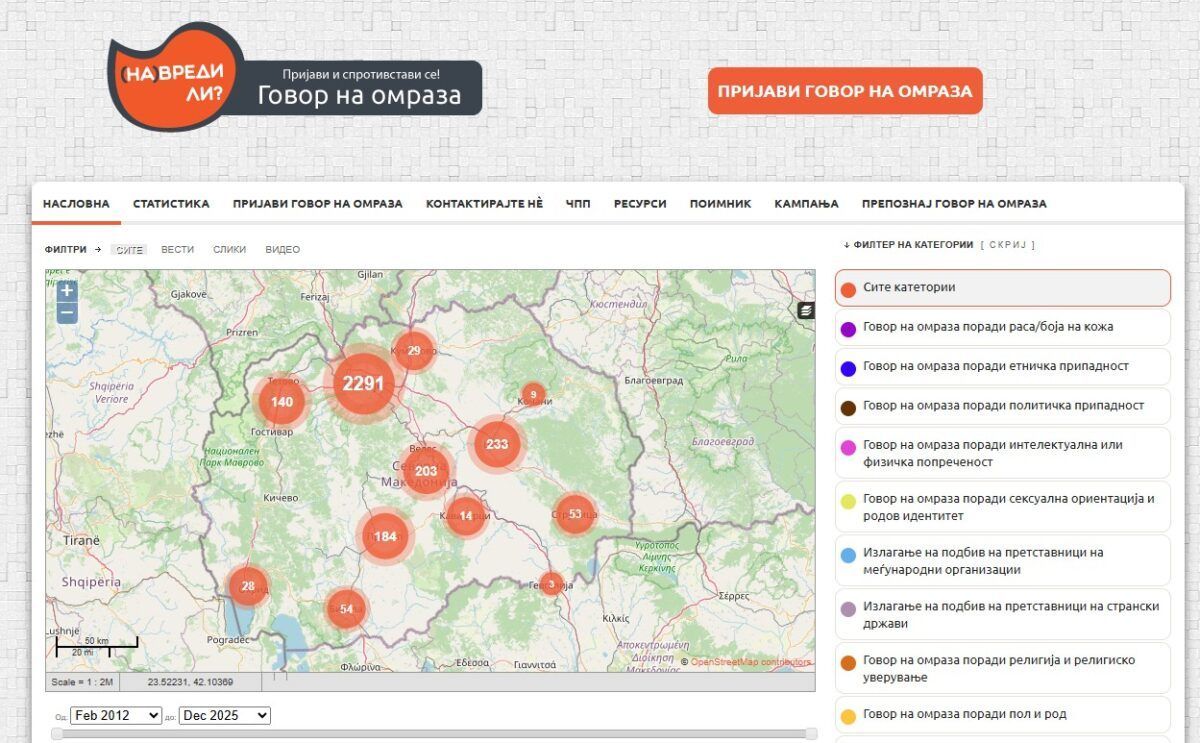
The Helsinki Committee for Human Rights monitored hate speech during the elections in online and traditional media. The data show that the month of October 2025, which included both rounds of the local elections, was marked by a drastic increase in hate speech. During this period, a total of 107 cases of hate speech were registered on the platform www.govornaomraza.mk which is more than a double increase compared to the previous monitoring period. Of these, 50 cases relate to hate speech based on ethnicity, 35 cases of national affiliation, 29 cases of political affiliation, 9 cases of sexual orientation and gender identity and 8 cases of sex and gender. The most pronounced is the polarization between the Macedonian and Albanian communities, as well as the increased attacks directed at the Roma community. Similar trends are observed in the pre-election period (August and September 2025), when a total of 139 cases of hate speech were registered. Most of them relate to ethnicity (71 cases) and national affiliation (50 cases), as well as political affiliation (27 cases), which indicates a gradual building of an atmosphere of intolerance that is further intensified with the start of the election campaigns.

Election monitoring conducted by the Center for Strategic Research and Analysis Bitola points to serious risks related to the digital space. During the election cycle, disinformation, manipulation of context, discrediting through unconfirmed “evidence”, as well as the spread of polarizing and identity narratives were detected. These phenomena are amplified in the most sensitive phases of the election process – the election silence and the voting days in both rounds – when the public is most vulnerable, and the risk of influencing trust and electoral integrity is the highest. The findings further indicate that such phenomena are often amplified by anonymous online sources, political and party networks on social media and some online media that transmit unverified content. In certain cases, sports and public events appear as a catalyst for the spread of nationalistic and offensive messages, which further deepens social divisions.
The monitoring findings show that, although the 2025 Local Elections were formally conducted in accordance with the legal framework, the public and digital context was marked by serious challenges. Increased hate speech, uneven institutional response and the presence of manipulative digital content undermine the quality of the democratic process and contribute to long-term distrust and polarization.
The common conclusion is that promoting a democratic and inclusive electoral process requires systemic and long-term measures, including enhanced monitoring during election periods, timely institutional response and preventive and educational activities to reduce hate speech and digital threats.
The activities are part of the projects "Monitoring Hate Speech - Guarantee for Democratic Elections" implemented by the Helsinki Committee for Human Rights and "Digital Shield: Monitoring the 2025 Local Elections from Hybrid Threats in the Digital Space" implemented by the Center for Strategic Research and Analysis Bitola, which are sub-grants awarded under the "EU Support to the Civil Society Resource Centre - Phase 2", funded by the European Union.